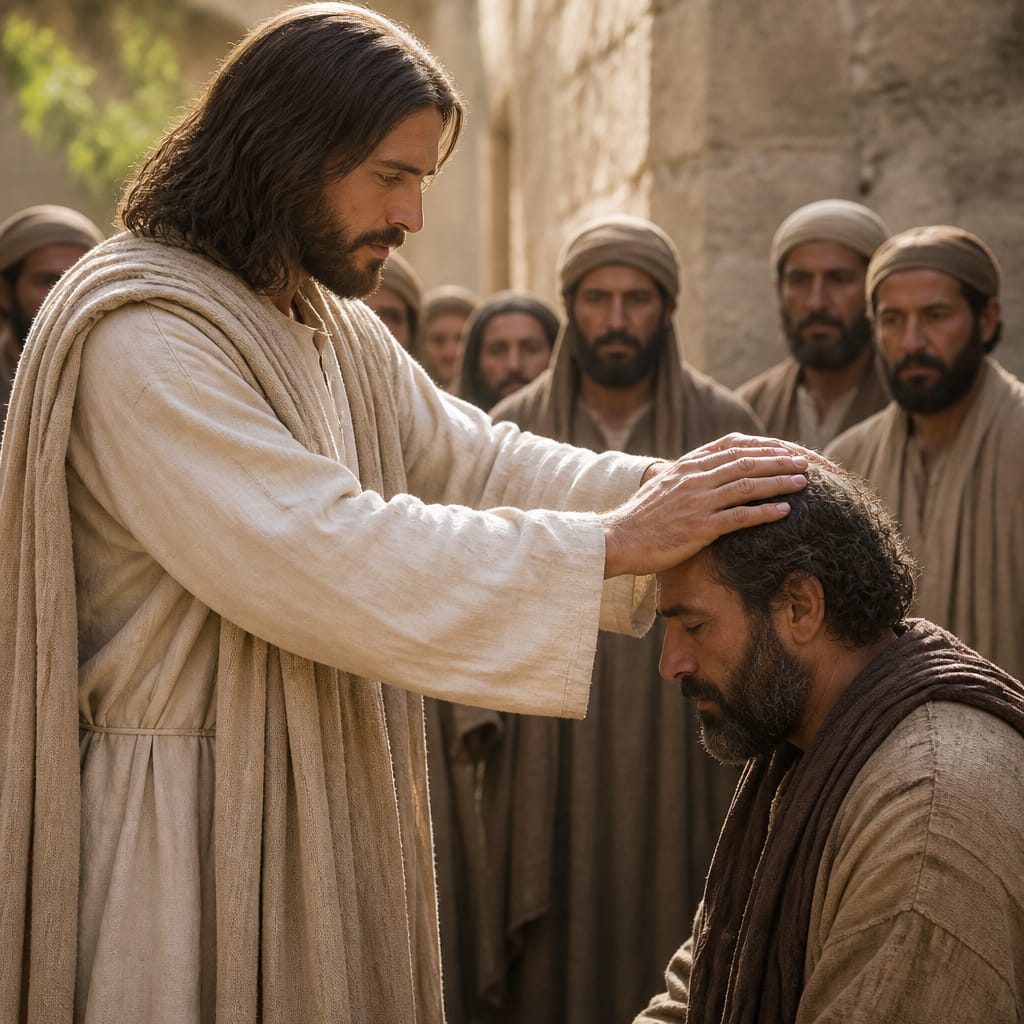
The laying on of hands is one of the oldest and most sacred biblical symbols—used for blessing, healing, imparting the Holy Spirit, and commissioning leaders. Scripture treats it as a solemn act tied to divine authority, not human preference. Yet in many modern Christian circles, the practice has expanded far beyond its biblical boundaries, sometimes becoming a ritual performed without regard for the conditions, restrictions, or purposes laid out in the Word of God.
This article examines where the Bible stands, how the early church practiced it, and how modern Christianity sometimes contradicts Scripture in both ordination and healing.
1. The Biblical Foundation of Laying on of Hands
The Bible presents laying on of hands as a God‑directed act, never a casual or self‑appointed ritual.
Old Testament Foundations
- Moses laid hands on Joshua to transfer leadership and authority (Numbers 27:18–23).
- Patriarchs used it to bless descendants (Genesis 48:14).
- It symbolized identification and responsibility in sacrifices (Leviticus 1:4).
New Testament Applications
- The apostles laid hands on deacons for ordination (Acts 6:6).
- Paul and Barnabas were commissioned through laying on of hands (Acts 13:3).
- Jesus healed by touch (Matthew 8:3; Mark 6:5).
- The Holy Spirit was imparted through apostolic laying on of hands (Acts 8:17–19; Acts 19:6).
- Hebrews 6:2 lists it as a foundational doctrine.
Key biblical pattern: Laying on of hands is always connected to divine appointment, apostolic authority, spiritual purpose, and clear instruction from God.
2. Where Modern Practice Begins to Drift
Many Christians today continue the practice, but often without the biblical safeguards, without divine instruction, or without the authority structure Scripture requires.
A. Ordaining Anyone and Everyone
In Scripture, ordination through laying on of hands was:
- done by apostles or elders appointed by apostles
- limited to individuals already chosen by God
- accompanied by prophecy or divine confirmation (1 Timothy 4:14)
But today:
- Churches ordain men and women based on popularity, education, or committee vote, not divine calling.
- Some denominations ordain both genders without examining whether Scripture authorizes such ordinations.
- Others ordain people into roles never found in the Bible—“apostles,” “prophets,” “chief bishops,” “intercessory pastors,” etc.
This contradicts the biblical pattern where:
- God chooses the leader
- the church recognizes the choice
- the laying on of hands confirms God’s decision, not man’s ambition
Modern error: Laying on of hands has become a human credentialing ceremony, not a divine commissioning.
B. Turning Healing Into a Performance
Jesus healed by touch, but always:
- with compassion
- with divine authority
- without theatrics
- without charging money
- without emotional manipulation
The apostles healed:
- only through the power of Christ
- only when directed by the Spirit
- never for show
But today:
- Some ministries use laying on of hands as a stage performance, pushing people to fall.
- Others claim healing power as if it is their personal gift, not God’s.
- Some “healers” lay hands on crowds indiscriminately, something never done by Jesus or the apostles.
This contradicts the biblical model where healing was:
- purposeful
- Spirit‑led
- reverent
- never self‑exalting
C. Imparting “Gifts” the Bible Never Mentions
In Acts, the Holy Spirit was imparted through the hands of:
- Peter
- John
- Paul
All were apostles with unique authority.
Today, however:
- Many claim the ability to impart “mantles,” “anointings,” “prophetic gifts,” or “apostolic power.”
- Some even sell impartation services or “anointed hands” conferences.
This contradicts Acts 8:18–20, where Simon the sorcerer was rebuked for thinking spiritual power could be transferred by human will.
3. The Core Issue: Authority vs. Imitation
The biblical act of laying on of hands is not a ritual anyone can perform at will. It is a sacred act tied to divine authority, not human enthusiasm.
Modern Christianity often:
- imitates the form
- ignores the conditions
- keeps the ritual
- loses the meaning
The result is a practice that looks biblical but lacks biblical legitimacy.
4. What Faithful Christians Should Consider
1. Who authorized the act?
In Scripture, only those with God‑given authority laid hands for ordination or impartation.
2. Is the purpose biblical?
Healing, blessing, and commissioning are biblical. Imparting “levels,” “mantles,” or “prophetic ranks” is not.
3. Is the act Spirit‑led or man‑driven?
Biblical laying on of hands always followed divine direction.
4. Does the practice glorify Christ or the performer?
If the focus is on the “healer,” the “apostle,” or the “bishop,” the practice has already departed from Scripture.
Conclusion: Returning to the Biblical Model
The laying on of hands is a holy act—rooted in Scripture, rich with meaning, and powerful when practiced according to God’s design. But when modern Christians use it:
- without biblical authority
- without divine calling
- without reverence
- or for purposes foreign to Scripture
they step outside the boundaries God established.
The solution is not to abandon the practice, but to restore it to its biblical purity—where God calls, the Spirit leads, and the church obeys.
By TL Neckles
