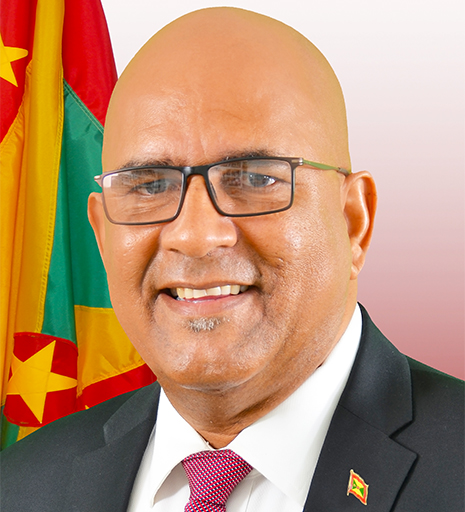
Grenada’s political landscape shifted dramatically with the official launch of the Democratic People’s Movement (DPM), led by former Foreign Affairs Minister Peter David. The party’s unveiling at the Grenada Trade Centre drew a massive crowd—diplomats, trade unionists, independent senators, and former NNP executives—signaling that this is not a fringe experiment but a serious new contender in national politics.
With general elections constitutionally due by 2027, Grenada now finds itself with a significant third parties, a development that could reshape voter behavior, split traditional bases, and complicate the path to victory for the established political giants.
Peter David’s Break from “Politics as Usual”
Peter David, who has held senior positions in both major parties over the years, framed the DPM as a movement born from frustration with entrenched political habits. He emphasized unity, dignity, and grassroots empowerment—rejecting the divisive, personality‑driven politics that have long defined Grenadian campaigns.
His message was clear:
- Grenada needs a politics that brings people together, not one that tears them apart.
- The DPM is built from the ground up, organized “on street corners and under traffic lights,” reflecting the voices of ordinary Grenadians.
- The movement belongs to the people, not to any entrenched political class.
This tone stands in contrast to the increasingly combative rhetoric seen elsewhere on the political stage.
A Complicated Election Ahead
With the emergence of the DPM, Grenada now has:
- The NDC (in government)
- The NNP (traditional opposition)
- The DPM (new, but with a leader who has deep roots in both major parties)
This three‑way dynamic introduces several new variables:
1. Vote Splitting Will Be Significant
The DPM’s arrival means that traditional voting blocs—especially those historically aligned with the NNP—may fracture. Peter David’s long association with both major parties gives him credibility across partisan lines, but it also means his support is likely to come at the expense of the older parties, particularly the NNP.
2. The NNP Faces Leadership Challenges
The NNP enters this new era with what many observers consider its weakest leadership position in decades. The party is still overshadowed by former Prime Minister Dr. Keith Mitchell, whose continued presence in the spotlight complicates the party’s transition to new leadership. This creates internal tension and public uncertainty about the party’s direction.
3. Emmalin Pierre’s Approach May Backfire
Mrs. Emmalin Pierre, now a central figure in the NNP, has leaned heavily into old‑style politics—division, personal attacks, and combative messaging. In an environment where voters are increasingly fatigued by negativity, this strategy risks alienating undecided and younger voters who are looking for a more constructive, unifying tone.
4. Peter David Positions Himself as the Unifier
In contrast, Peter David has consistently spoken against divisive politics. His message of unity, dignity, and national healing resonates with Grenadians who feel left behind by decades of political rivalry. His promise to bring people together “regardless of party affiliation” gives the DPM a distinct identity at a time when many citizens are disillusioned with traditional political behavior.
Who Stands to Lose the Most?
Based on political history and current dynamics:
- The NNP is the most vulnerable to losing supporters to the DPM.
- Peter David’s recent departure from the NNP, combined with his strong personal following, makes him a natural magnet for disaffected NNP voters.
- The NDC, currently in government, may lose some support as well, but its base is more stable and less overlapping with David’s political history.
The DPM’s emergence therefore threatens to split the opposition vote, potentially reshaping the electoral map and forcing all parties to rethink their strategies.
A New Chapter for Grenada
The launch of the Democratic People’s Movement marks more than the birth of a new party—it signals a broader shift in Grenadian political culture. With voters increasingly demanding transparency, unity, and real development, the old formulas may no longer be enough.
Peter David’s message—rooted in dignity, participation, and national cohesion—positions the DPM as a serious force heading into the 2027 election cycle. Whether it becomes a transformative movement or a disruptive spoiler will depend on how Grenadians respond to this call for a new political era.
But one thing is certain: The next election will be one of the most unpredictable in Grenada’s modern history.
By TL Neckles
