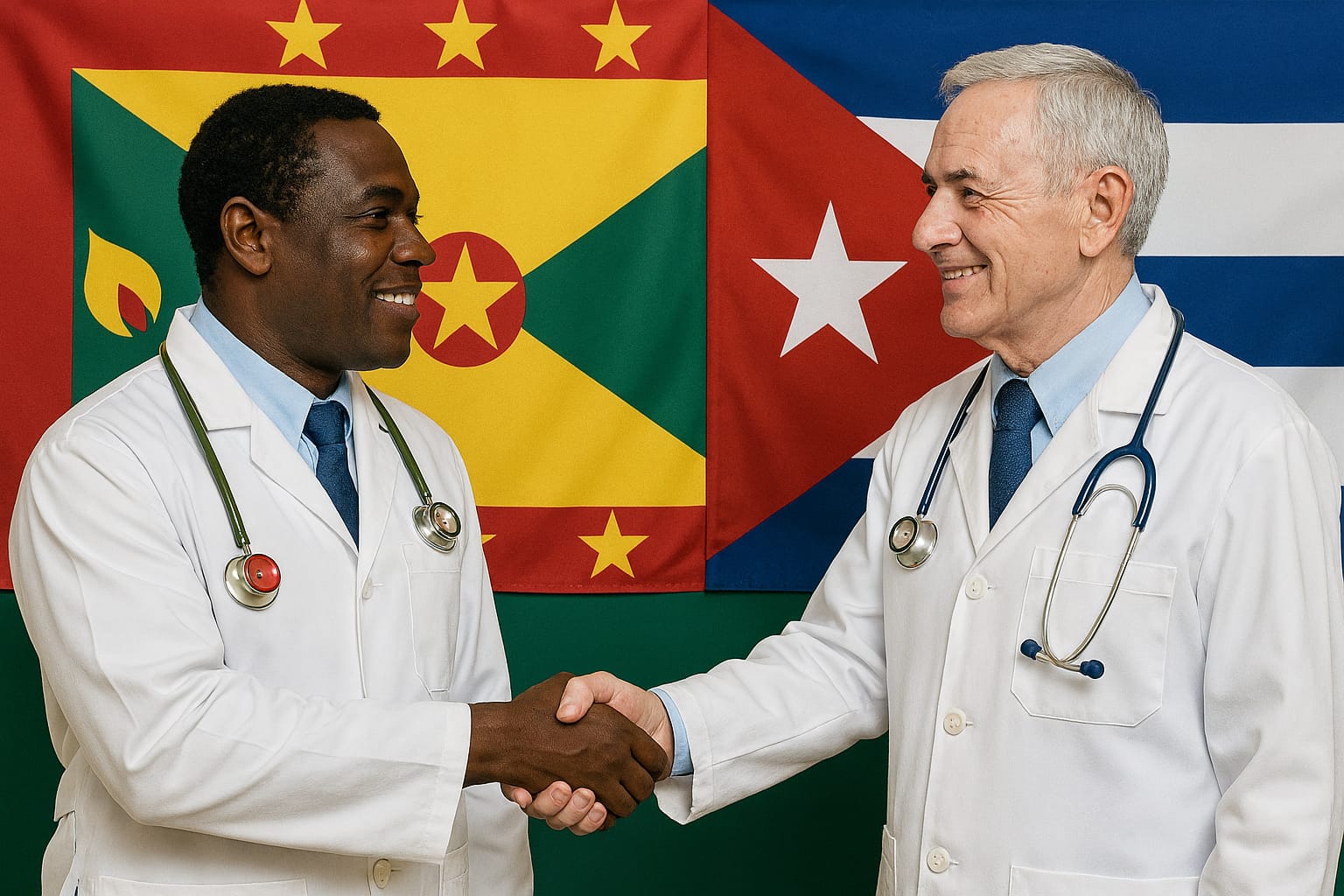
Grenada stands at a critical crossroads. Washington has intensified pressure on Caribbean nations—including Grenada—to distance themselves from Cuba’s medical cooperation program, imposing visa restrictions on Grenadian officials and framing Cuba’s overseas medical missions as “forced labor.” But this pressure campaign collides with a simple, unavoidable truth: Grenada’s healthcare system depends heavily on Cuban medical personnel, and losing them would create an immediate and dangerous shortage of doctors.
If the United States insists that Grenada abandon a partnership essential to public health, then Grenada has every right—indeed, a responsibility—to say: If we cannot keep the Cuban doctors who sustain our healthcare system, we cannot accept third‑country deportees from the United States.
This is not retaliation. It is self‑preservation.
Cuban Doctors Are Not Optional—They Are Essential
Grenadian leaders have repeatedly affirmed that Cuban medical teams are indispensable to the island’s healthcare system. Finance Minister Dennis Cornwall described their contribution as “irreplaceable,” noting that Grenada’s support for Cuba is rooted in legal, ethical, and moral obligation.
For decades, Cuban doctors have staffed hospitals, filled specialist gaps, and provided care in rural communities where no alternatives exist. Without them, Grenada would face:
- Longer wait times for essential services
- Reduced access to specialists
- Strain on emergency and surgical capacity
- Higher mortality rates, especially among vulnerable populations
The United States has not offered any replacement medical personnel, funding, or training programs to fill the gap it is attempting to create.
Washington’s Pressure Campaign Creates an Impossible Double Standard
The U.S. government has escalated its campaign against Cuba’s medical missions, imposing visa restrictions on officials from Cuba, African nations, and Grenada. At the same time, Washington continues to pressure Caribbean nations to accept third‑country deportees—people who are not citizens of Grenada but are being removed from the United States.
This creates a contradiction:
- The U.S. demands Grenada weaken its healthcare system by abandoning Cuban doctors.
- The U.S. simultaneously expects Grenada to absorb additional social burdens by accepting deportees who will require housing, jobs, integration support, and in many cases medical care.
Grenada cannot responsibly accept these deportees while its own healthcare capacity is being undermined.
Grenada Has the Right—and the Duty—to Protect Its People
Small island nations must often navigate geopolitical pressure from larger powers. But sovereignty includes the right to prioritize national wellbeing.
Grenada can and should assert:
- Healthcare is a national security issue. A doctor shortage threatens lives more directly than any diplomatic dispute.
- Partnerships must be reciprocal. If the U.S. wants cooperation on deportees, it must respect Grenada’s right to maintain essential medical partnerships.
- No country should be forced to choose between diplomacy and public health. Grenada’s first obligation is to its citizens.
This is not anti‑American. It is pro‑Grenadian.
A Fair, Balanced Position for Grenada
Grenada can articulate a principled stance:
- We value our relationship with the United States.
- We value our relationship with Cuba.
- We will not compromise the health and safety of our people.
- If Cuban doctors are removed due to U.S. pressure, we cannot accept third‑country deportees.
This is a reasonable, responsible position grounded in national interest—not ideology.
In conclusion: Grenada Must Stand Firm
The United States has every right to shape its foreign policy. Grenada has the same right.
If Washington insists on policies that would leave Grenada short of doctors, then Grenada must insist on policies that protect its own population. That means making it clear:
No Cuban doctors, no third‑country deportees.
A nation of 110,000 people cannot be expected to absorb additional burdens while its healthcare system is being weakened. Grenada must defend its sovereignty, its partnerships, and above all, the wellbeing of its citizens.
By TL Neckles
