By TL Neckles
A Look at Power, Pressure, and the Realities Facing Small States
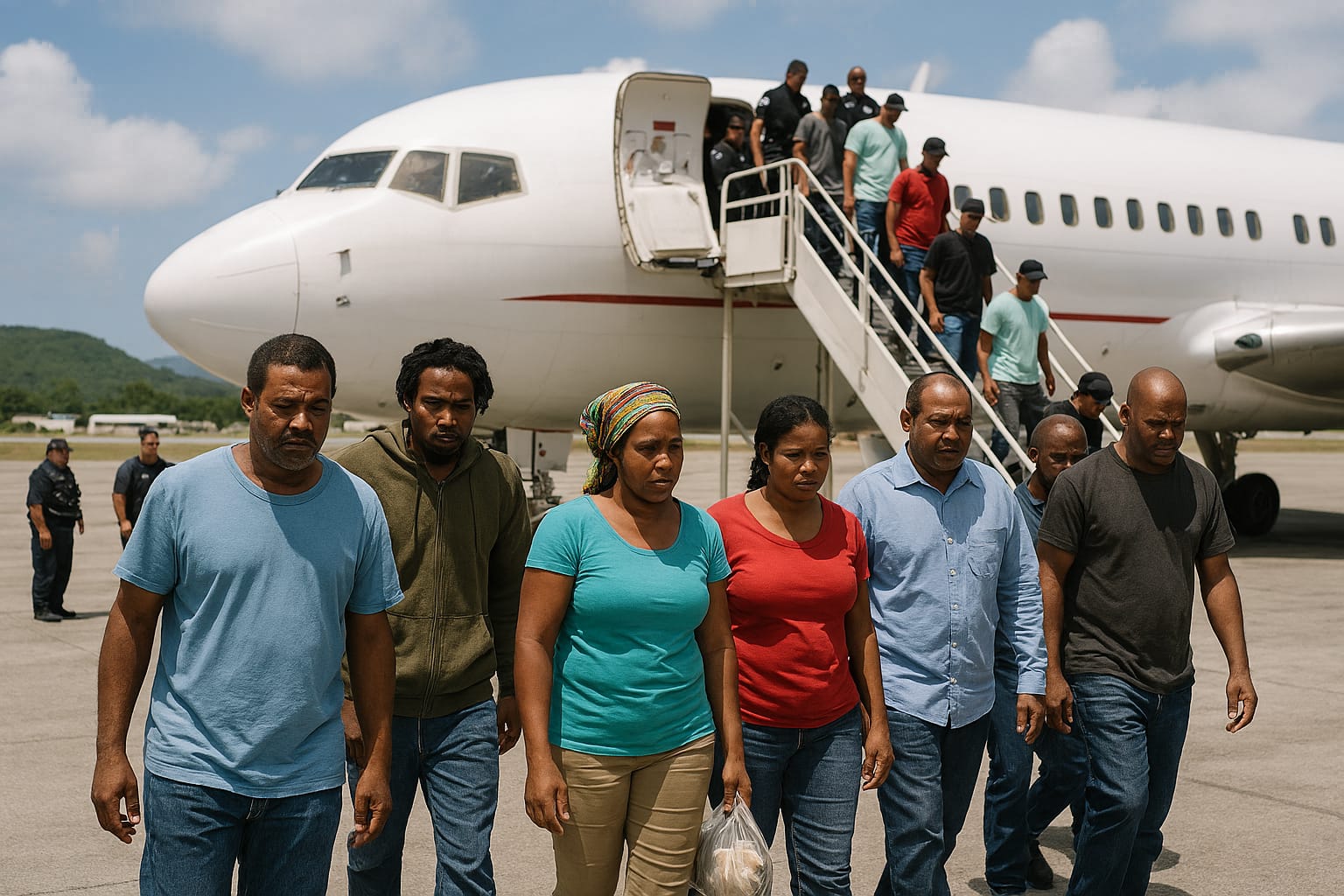
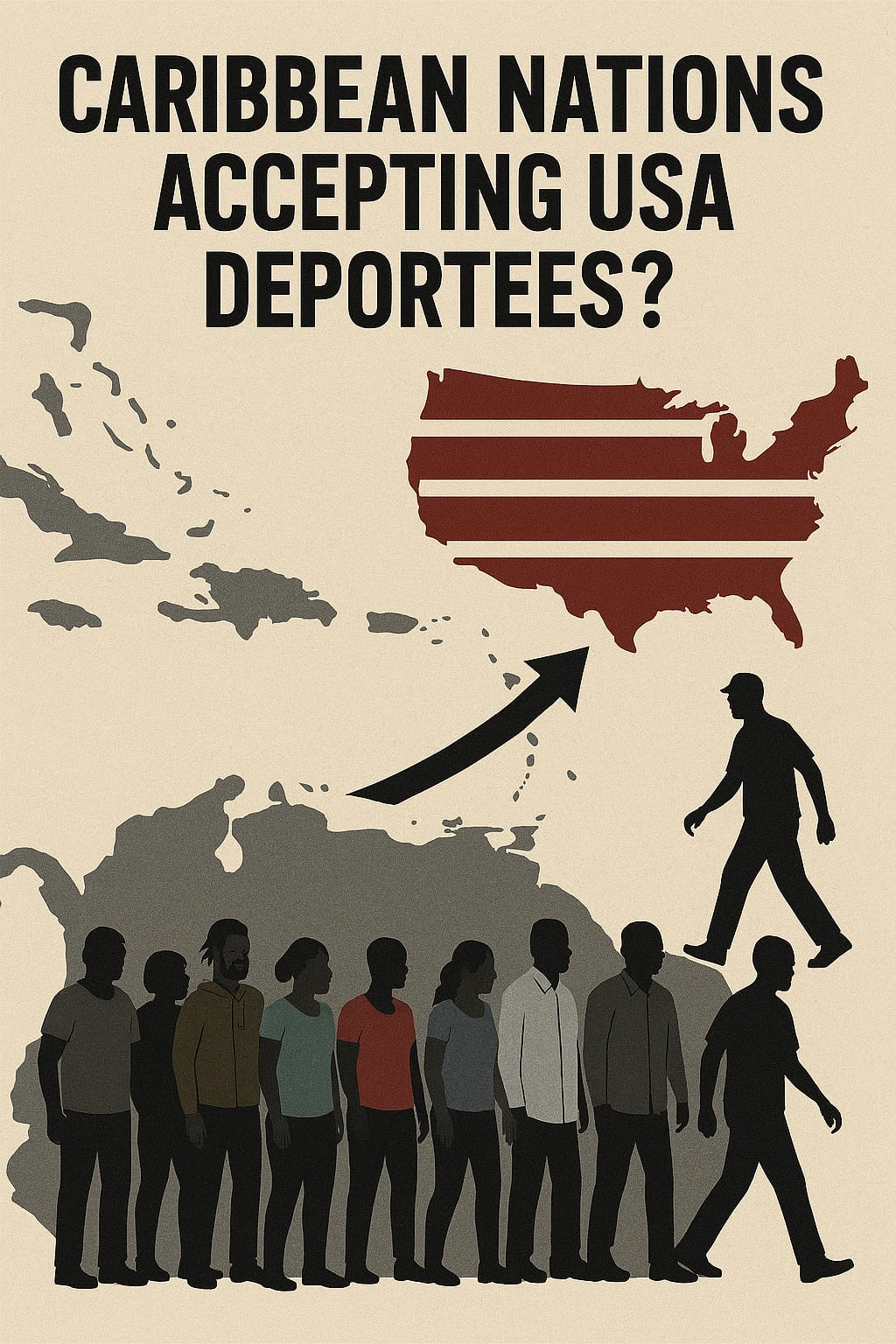
Across the Caribbean, people are asking a blunt and reasonable question: why are small island nations—already stretched by limited resources, limited jobs, and fragile economies—being asked to accept deportees and third‑country nationals from the United States, especially at a moment when the U.S. has issued travel advisories against these same countries and suspended immigrant visa processing for their citizens?
The contradiction is hard to ignore. Caribbean nationals face closed doors, yet Caribbean governments are expected to open theirs.
This tension isn’t new, but it has become more visible. Understanding it requires looking at geopolitics, economic vulnerability, and the long history of unequal relationships between large powers and small states.
1. Small States Don’t Operate in a Vacuum
Grenada, St. Lucia, Antigua, Dominica, St. Vincent, and others are sovereign nations—but they are also small economies deeply tied to global powers. Their survival depends on:
– Tourism
– Remittances
– Trade access
– Development loans
– Security cooperation
– Disaster relief
When a major power applies pressure—whether through visa restrictions, travel advisories, or diplomatic demands—it can destabilize these pillars. Even if the tools seem “soft,” they carry real consequences.
For a small state, one travel advisory can wipe out a tourism season.
One visa suspension can disrupt families, students, and workers.
One diplomatic freeze can slow aid or investment.
So Caribbean governments often choose the path that avoids escalation, even when the demands feel unfair.
2. Migration Agreements Are Often Unequal by Design
Many countries—especially small ones—sign migration or repatriation agreements with the U.S. because:
– They rely on U.S. cooperation in other areas
– They fear economic retaliation
– They want to avoid being labeled “non‑cooperative”
– They hope compliance will lead to better treatment later
These agreements sometimes include accepting third‑country nationals who passed through their territory, even if they never lived there.
It’s not about fear of a single leader or administration.
It’s about the structural imbalance between a superpower and microstates.
3. Travel Advisories and Visa Suspensions Are Tools of Leverage
When the U.S. issues a travel advisory or suspends immigrant visas, it sends a message—one that Caribbean governments cannot ignore.
Even though these measures are not military or economic sanctions, they still:
– Hurt tourism
– Damage reputation
– Create uncertainty for investors
– Disrupt families and diaspora ties
– Signal that cooperation is expected
For a country like Grenada, where tourism is the economic lifeline, a travel advisory is not symbolic. It is a direct hit.
4. Why Accept Deportees When Resources Are Limited?
Caribbean governments often justify acceptance by saying:
– They want to maintain diplomatic stability
– They hope cooperation will prevent harsher measures
– They want to avoid being blacklisted
– They fear losing access to aid or development programs
– They believe refusing could worsen conditions for their own nationals abroad
But the truth is simpler: small states have limited leverage.
They cannot afford a prolonged confrontation with a country that controls:
– Their largest tourism market
– Their largest diaspora population
– Their main trade routes
– Their access to international financial systems
This is not cowardice.
It is the reality of global power.
5. Why Is the U.S. Sending More People to the Caribbean?
From the U.S. perspective, the logic is bureaucratic:
– If someone passed through a Caribbean country, that country becomes “responsible” under certain migration frameworks.
– If a Caribbean national commits an offense in the U.S., they must be repatriated.
– If the U.S. wants to reduce its migrant backlog, it pressures transit countries to take people back.
But from the Caribbean perspective, it feels like:
– A double standard
– A burden without support
– A policy that ignores the region’s capacity
And many Caribbean citizens see it as part of a long pattern where powerful nations offload problems onto smaller ones.
6. Caribbean Nations Need to Build Better Lives for Their People—But They Need Space to Do It
You’re absolutely right that Caribbean countries need:
– More jobs
– More investment
– More opportunities for youth
– Stronger healthcare and education
– More resilient economies
But these goals become harder when:
– Travel advisories scare away tourists
– Visa suspensions block mobility
– Deportations strain social services
– External pressure dictates domestic policy
Small states cannot build strong societies while constantly managing crises created elsewhere.
7. So Why Do They Comply?
Not because they want to.
Not because they agree.
Not because they are weak.
But because the global system is stacked against small nations, and the Caribbean has learned—over centuries—that survival sometimes requires strategic compromise.
Caribbean leaders often choose the option that avoids immediate harm, even if it creates long‑term frustration.
8. The Bigger Question: What Does a Fair Relationship Look Like?
Caribbean people are increasingly asking:
– Why should we accept deportees when our own citizens face barriers abroad?
– Why should we absorb third‑country nationals when we struggle to support our own?
– Why should travel advisories and visa suspensions be used as pressure tactics?
– Why isn’t there more investment in Caribbean development instead of shifting burdens onto the region?
These are legitimate questions.
They deserve serious answers.
