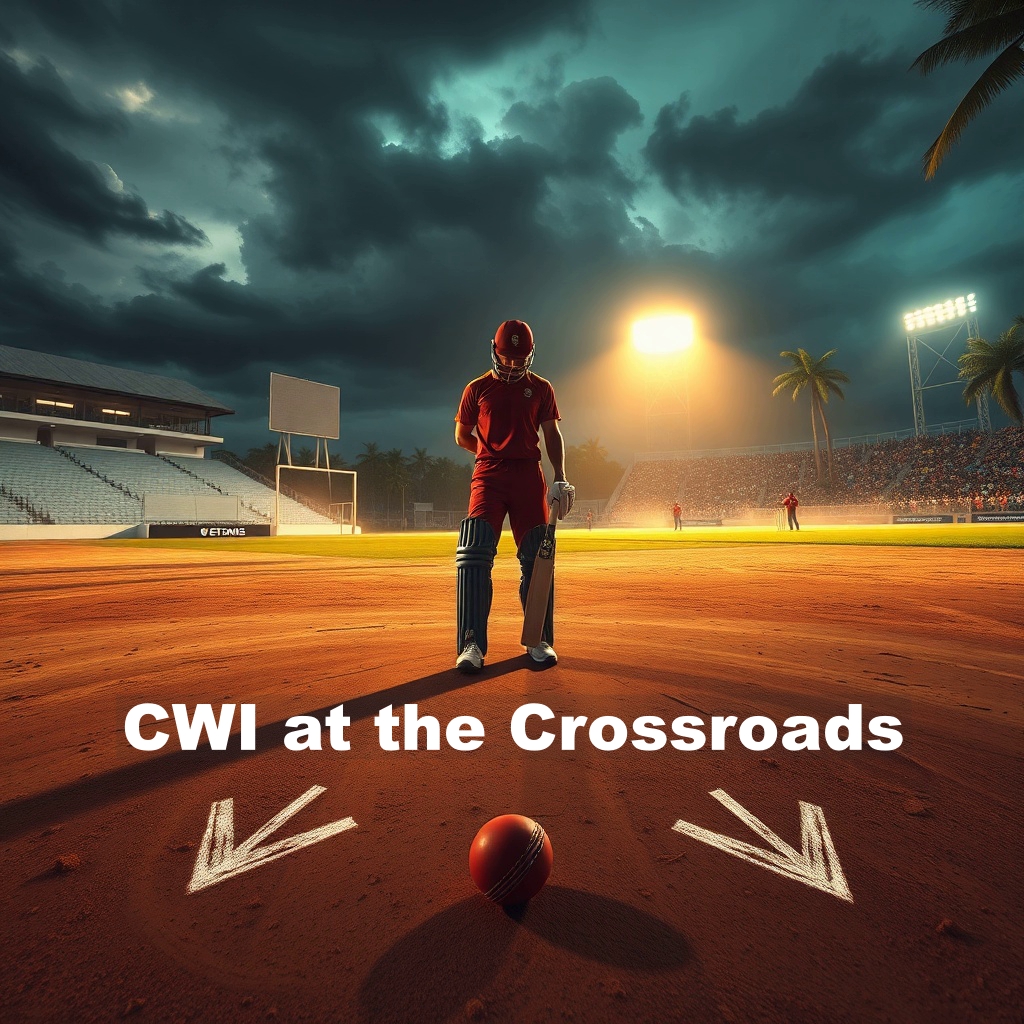
Cricket West Indies’ decision to drop two teams from the domestic championship isn’t just a scheduling tweak—it’s a structural retreat. For a region already wrestling with player depth, match exposure, and pathways to elite cricket, removing sides like the West Indies Academy and Combined Campuses & Colleges (CCC) is likely to do more harm than good. The immediate effect is fewer opportunities; the long-term effect could be a weaker, narrower talent pipeline.
What this decision really means
- Fewer teams equals fewer contracts, fewer match days, and fewer innings/bowling spells for emerging players to learn, fail, adjust, and improve.
- The two teams reportedly affected—West Indies Academy and CCC—have been critical development bridges:
- CCC has historically provided a route for student-athletes and late bloomers who weren’t fast-tracked through territorial systems.
- The Academy (and its earlier “Emerging Players” iteration) gave high potential prospects competitive minutes against seasoned domestic pros, accelerating readiness for international cricket.
- These sides have already produced players who stepped into senior West Indies squads. That’s not theoretical—it’s proven.
Who loses the most
- Young, developing players
- With fewer slots, fringe and developmental players will be the first squeezed out. In a six-team structure, incumbency and politics often carry more weight than potential.
- Match volume is oxygen for growth. Batters need long innings; bowlers need spells under pressure. Reducing teams reduces those reps.
- Players without patrons
- Cricket in small systems can be about visibility and advocacy. The Academy and CCC offered neutral, performance-led platforms—places where you didn’t need a big name to be seen.
- Without these teams, many who lack “someone to look out for them” may simply vanish from selectors’ eyelines.
- Senior pros still performing
- The squeeze isn’t only at the bottom. With squads tightening, there’s a real risk that older but still-productive players are cut to make space—especially if franchises or boards favor “future planning” over form.
- Experience matters. Young squads without in-form seniors can stagnate without role models and pressure-tested leaders.
The development math: fewer teams, fewer games, slower growth
- Batting development needs time-in-the-middle. A contracted schedule means fewer opportunities to convert starts, learn to bat long, or build consistency across conditions.
- Bowling growth comes from workload variety—new-ball spells, old-ball plans, flat-pitch problem-solving. Reduce the calendar and you reduce the craft.
- Fielding and tactical IQ—both sharpen with match intensity. Less competition equals slower tactical maturity.
“Quality over quantity” sounds good, but only works with a second tier
Some will argue that cutting sides raises the standard. That can be true—but only in countries that offset contraction with robust second XI or development structures.
- Australia: Only six states, but a full second XI system (Futures League/2nd XI) and strong Academy pathways ensure high game volume for non-starting players.
- England: Eighteen first-class counties plus full 2nd XI competitions. Thousands of professional match minutes for developing players.
- South Africa: Two divisions and an academy circuit; U19/Cubs Weeks; strong A-team programming.
- India: Massive domestic base (Ranji, Vijay Hazare, Syed Mushtaq Ali) with high match volume—evidence that breadth and depth fuel excellence.
Cutting West Indies’ teams without simultaneously adding a frequent, well-funded development tier is not “quality over quantity.” It’s just less cricket.
What the Academy and CCC uniquely provided
- A meritocratic entry point: Perform and you play—simple, and invaluable for late bloomers or non-traditional pathways.
- A classroom in motion: University-based cricket nurtures discipline, balance, and resilience—traits that travel well to international sport.
- A bridge to international selection: Recent seasons have shown that these programs do more than participate; they graduate players into the West Indies setup.
Risks to the national team
- Thinner bench strength: Injuries, form slumps, and schedule congestion can’t be managed without a ready reservoir of players with recent, relevant match practice.
- Slower transition planning: As senior stalwarts phase out, fewer match-ready replacements will extend rebuilding cycles.
- Erosion of regional competitiveness: The domestic product must be compelling to fans, sponsors, and broadcasters. Variety and player stories enrich that product; contraction flattens it.
Constructive alternatives (that protect development and standards)
If contraction proceeds, there are ways to mitigate the damage. Better yet, these steps could strengthen the system regardless:
- Full second XI/reserve league
- Mandatory for all six territorial teams, with 8–10 fixtures per season.
- Shared venues, double-headers, and centralized funding to control costs.
- Keep the Academy alive—with guaranteed fixtures
- Even if not in the premier league, guarantee the Academy 8–12 competitive matches per season against first-class or strong A/2nd XI opposition.
- Integrate Academy players into territorial sides via short-term loans.
- Reinstate or reshape CCC’s role
- Link CCC to a formal “University Select” program with academic scholarships, performance incentives, and access to top coaching.
- Create an annual CCC/Academy development window before major tournaments.
- Loan and dual-registration system
- Allow players blocked by depth charts to move temporarily to teams with positional needs.
- Cap recalls to ensure integrity and continuity.
- Selection safeguards and transparency
- Publish clear selection criteria (fitness, form, role balance, fielding standards).
- Introduce independent selection observers to reduce perceived favoritism.
- Match-minute guarantees for prospects
- In white-ball tournaments, require a minimum number of games for two U23 players per team—balanced by performance clauses to avoid tokenism.
- Year-round pathway alignment
- Sync U19, A-team, Academy, and domestic calendars so prospects flow through tiers without long inactive stretches.
- Use the off-season for high-intensity camps and red-ball skill blocks.
How to measure if the new model is failing (or working)
- Number of players making first-class/List A debuts per season.
- Total domestic match minutes for players under 23 and under 26.
- Conversion rates: 50s to 100s; three-fors to five-fors.
- Injury incidence (especially for fast bowlers) linked to workload spikes due to reduced rotation options.
- A-team and senior team readiness: fewer “debut shock” performances indicate a healthier pipeline.
Final word
This decision feels like a backward step because it narrows the pathway right where West Indies cricket needs breadth. The Academy and CCC didn’t just fill fixtures—they caught talent that might otherwise slip through cracks. If the goal is a stronger West Indies, the solution isn’t fewer doors; it’s smarter doors, more hinges, and better lighting.
Reverse the cut—or, at minimum, replace it with a fully funded second tier, a robust loan system, and protected match time for emerging players. Otherwise, the players without advocates—the very ones the region can least afford to lose—will be the first to disappear. That would be a loss not just for them, but for West Indies cricket itself.
